01
Skin assessment
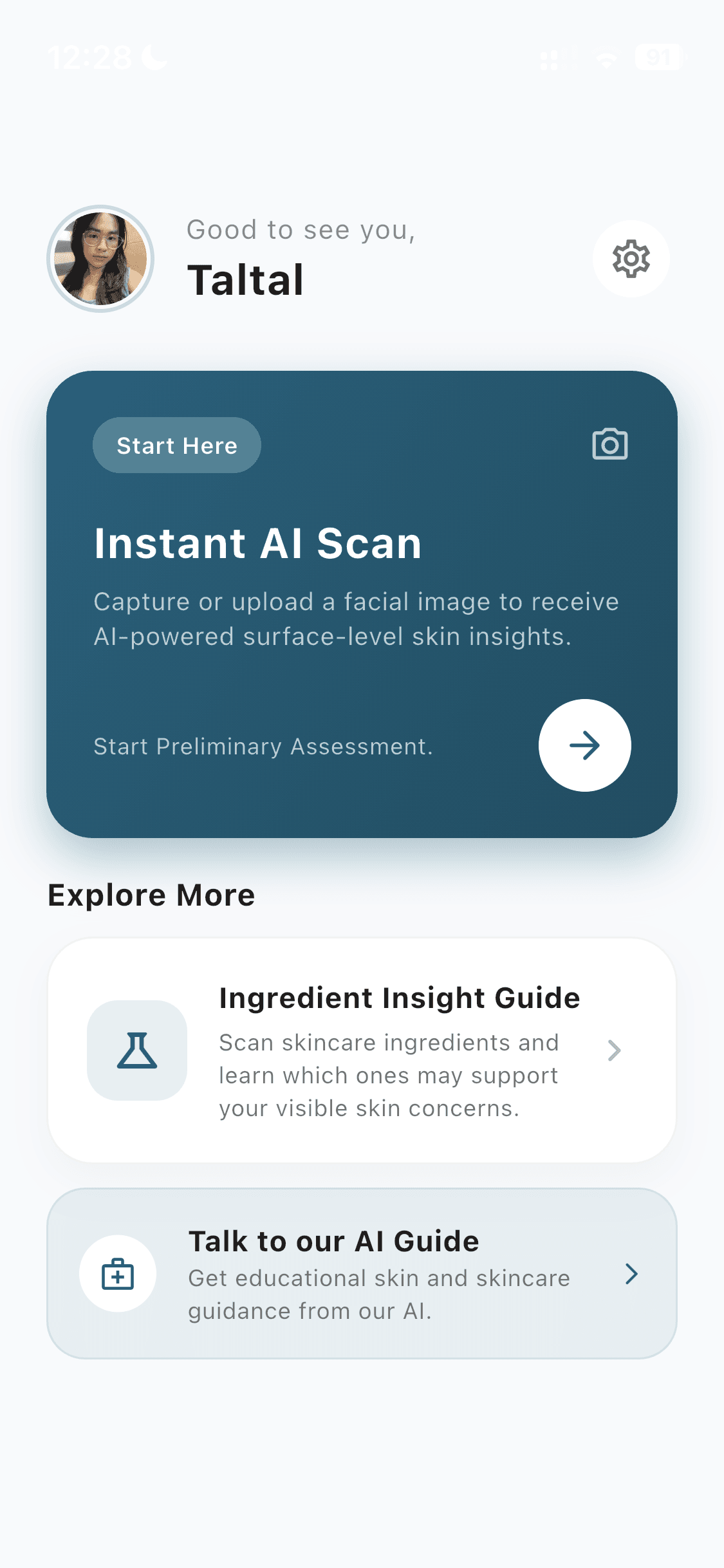
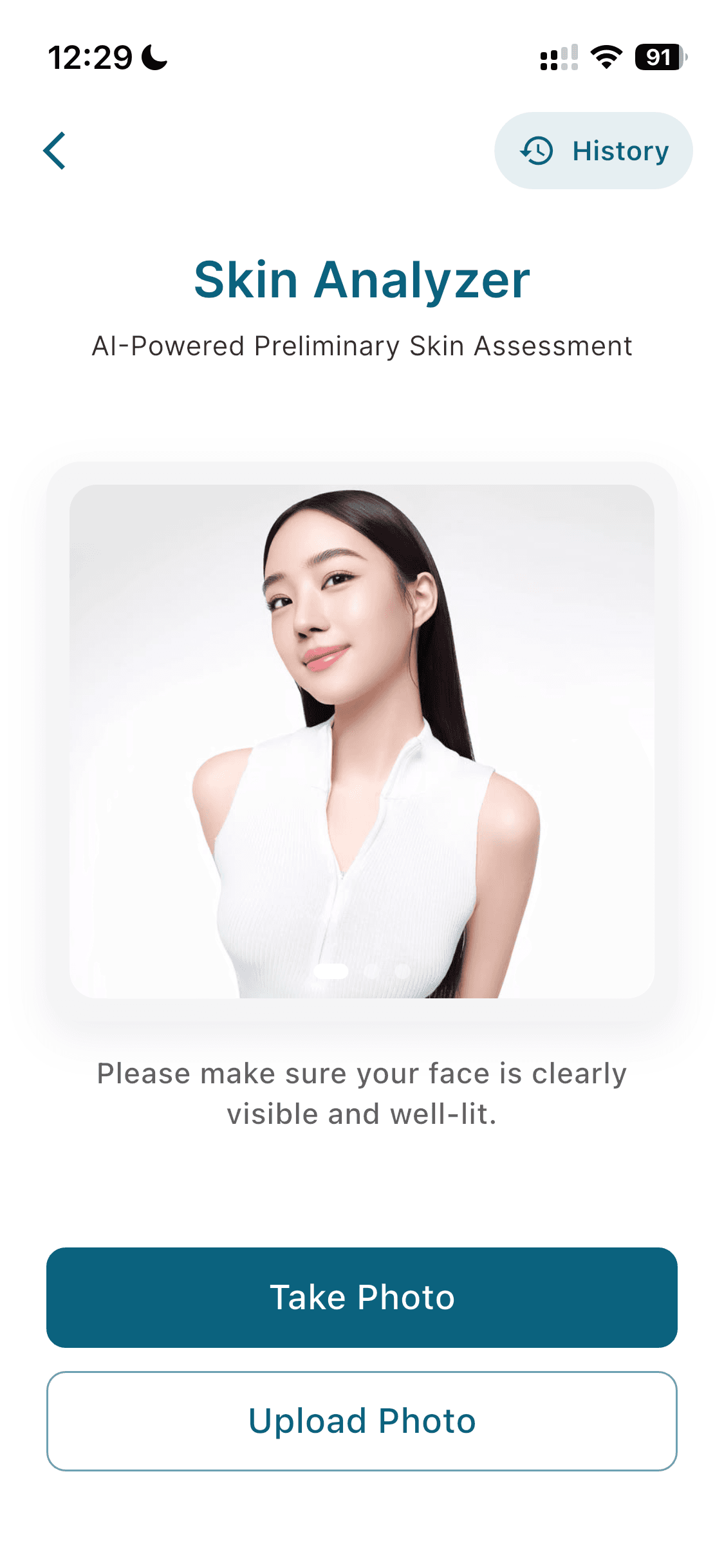
Users can capture or upload a facial image, receive guided validation, and generate an AI-assisted preliminary skin assessment with clear confidence and retake feedback.
Welcome to my world
Case Study · System Development
Making preliminary facial skin assessment clearer, more accessible, and easier to understand through an AI-assisted mobile experience.
Project overview
Making preliminary facial skin assessment clearer, more accessible, and easier to understand through an AI-assisted mobile experience.
01 · Context
SkinSense AI was created to explore how AI-assisted technology can make preliminary facial skin assessment easier to understand and more accessible. The project brings together image-based assessment, guided explanations, skincare ingredient insights, and conversational support within one mobile experience.
02 · Problem
Many users are surrounded by skincare advice, product claims, and online recommendations, yet still struggle to understand visible skin concerns or make sense of the ingredients in the products they use. When access to professional guidance is limited, this uncertainty can lead to self-assessment, trial-and-error routines, and decisions based on incomplete or unreliable information.
03 · Process
The process moved from understanding the problem to shaping the experience, defining the system behind it, and continuously refining how each part worked together.
Understand the users, access barriers, skincare-information challenges, and real-world constraints that shaped the direction of SkinSense AI.
Map how users move from onboarding and facial image assessment to results, ingredient insights, history, and AI-assisted guidance.
Explore content hierarchy, screen relationships, and interaction patterns before committing to the final visual direction.
Design an experience that makes preliminary results, confidence cues, guidance, and retake states easier to understand without presenting them as medical diagnoses.
Define how the mobile application, backend, AI models, authentication, database, storage, and supporting services work together as one system.
Build each workflow, test real system behavior, identify limitations, and refine the experience through repeated development and review.
04 · Solution
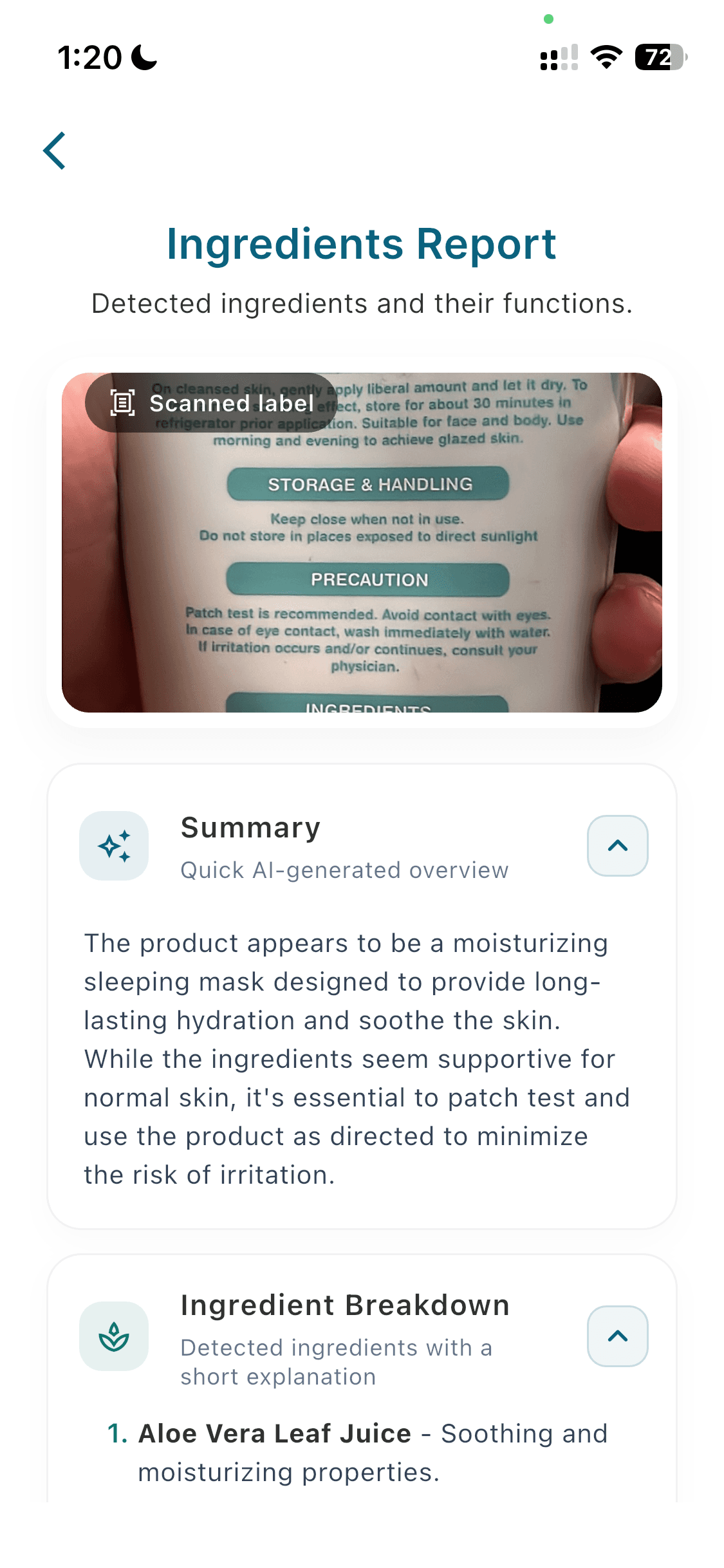
SkinSense AI brings preliminary facial skin assessment, ingredient insights, educational guidance, and conversational support into one mobile experience. Instead of treating each feature as a separate tool, the system connects them into a clearer flow—from capturing a facial image, to understanding the result, exploring product ingredients, and accessing additional guidance when needed.
05 · Final product
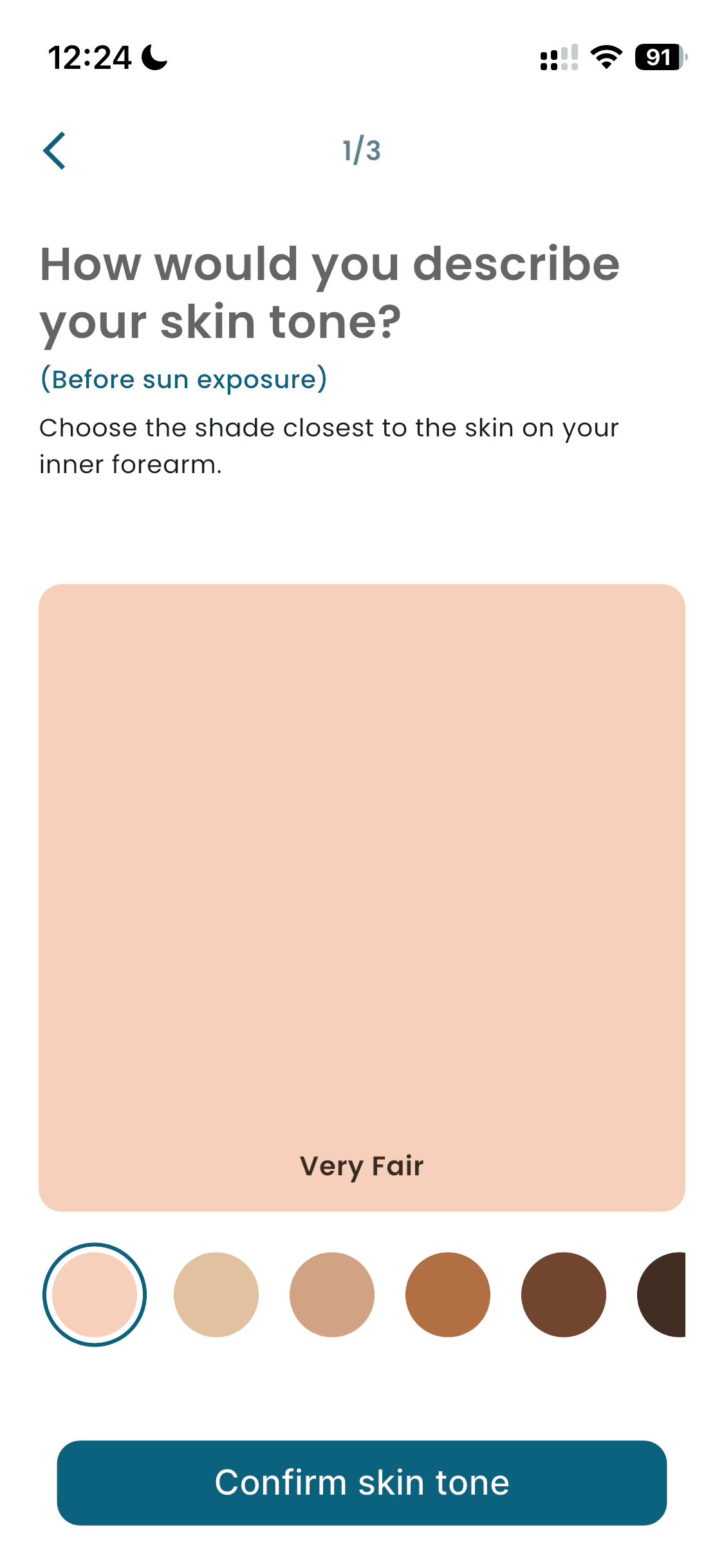
Users can capture or upload a facial image, receive guided validation, and generate an AI-assisted preliminary skin assessment with clear confidence and retake feedback.
Assessment results connect with personalized reports, ingredient insights, scan history, and AI chat experiences designed to make the information easier to understand.
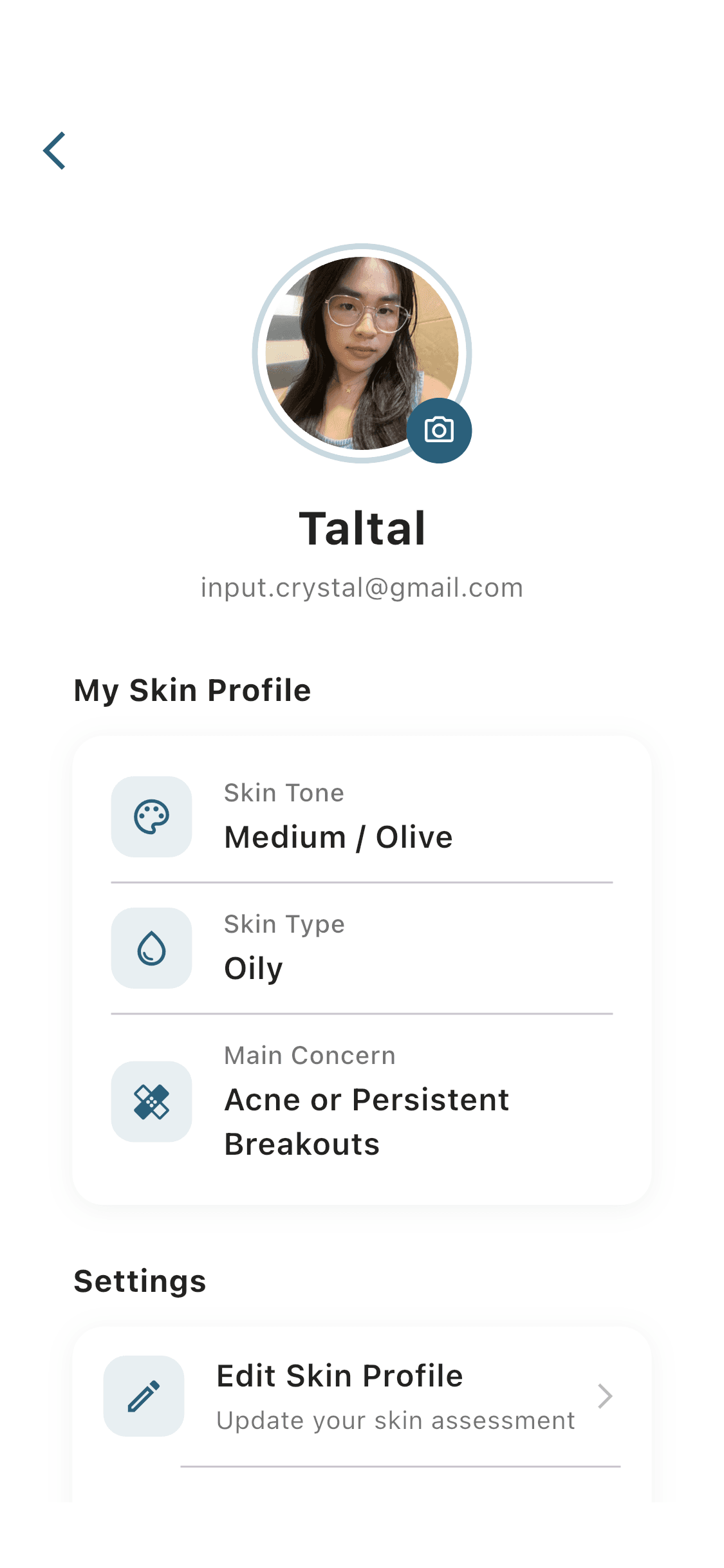
The experience brings assessment, history, ingredient scanning, profile settings, and guidance into one cohesive mobile system built around clarity and ease of use.
06 · Reflection
Building SkinSense AI taught me that creating an AI-powered product is not only about making the model work. The experience also needs clear guidance, thoughtful safeguards, understandable feedback, and a system users can trust.
The biggest challenge was connecting multiple parts of the product—image validation, AI inference, authentication, data handling, mobile interactions, and the administration system—into one coherent experience.
With more time and data, I would continue improving model evaluation, expand testing across different real-world conditions, refine uncertain-result handling, and further validate the experience with a wider group of users.
The next step is moving beyond the current functional prototype toward a more production-ready system, with stronger model validation, scalable AI services, broader testing, and continued refinement based on real user feedback.
End of case study
SkinSense AI